A detailed explanation with practical, real-life examples
Jyotish is often misunderstood as a collection of rules, cookbook-style formulas, and rigid interpretations. But the approach in this blog highlights a far more intelligent, observational, and experiential way of reading charts. It teaches that:
- Houses (Bhavas) represent where something in life happens.
- Planets (Grahas) represent who is acting or what force is expressing.
- Rashis (Signs) represent how the activity is influenced by the environment or psychological climate.
This is the core engine of chart interpretation.
To understand this, imagine the universe as a giant school:
- Bhava = classroom
- Planet = student doing the activity
- Rashi = atmosphere or mood of the classroom
A student behaves differently in a noisy classroom vs. a quiet one.
Similarly, a planet behaves differently depending on:
- the context (house),
- its nature (planetary qualities),
- and the atmosphere (rashi).
Let us now go into a deep explanation of each part, step by step.
1. Bhava – The Context or Life-Area (The “Jar” Analogy in this blog)
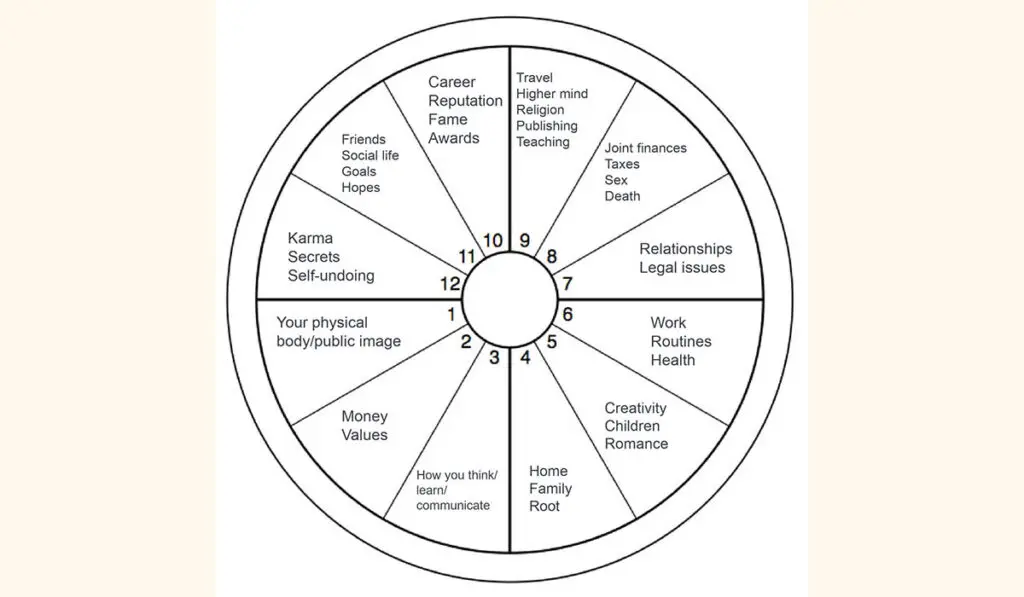
This blog beautifully compares bhavas (houses) to 12 transparent jars placed in a kitchen.
The jars are empty; they represent contexts such as:
- self
- money
- siblings
- home
- creativity
- health
- spouse
- longevity
- father (in many ways)
- career
- gains
- losses
The jars don’t care what is put inside them.
They only define what that jar is used for.
Example:
A jar labeled “biscuits” may contain:
- sweet biscuits
- salty biscuits
- broken biscuits
- homemade biscuits
- packaged biscuits
The label never changes, but the content does.
Likewise:
- The 2nd House will always represent wealth, speech, values.
- The 4th House always represents home, emotional comfort, mother.
- The 10th House always represents work and responsibilities.
These contexts never change,
“Houses are eternal (śāśvata) and unchanging.”
What changes is how these houses express themselves based on:
- the planet inside the house,
- aspects from other planets,
- the sign on the cusp, and
- strength or weakness of that planet.
This means in Jyotish, a house is not an “event.”
It is the field where events of a certain category manifest.
⭐ Example of Context:
Let’s take 7th house (relationships, partnerships):
- If Mars sits there → relationships become assertive, direct, impulsive
- If Venus sits there → relationships become sweet, artistic, balanced
- If Saturn sits there → relationships become slow, serious, karmic
- If Moon sits there → relationships become emotional, fluctuating
The context stays the same (partnership), but the experience changes depending on the planet.
Thus:
Context remains fixed, expression varies.
2. Planet – The Doer, Actor, or Energy (The “Who is acting?” question)
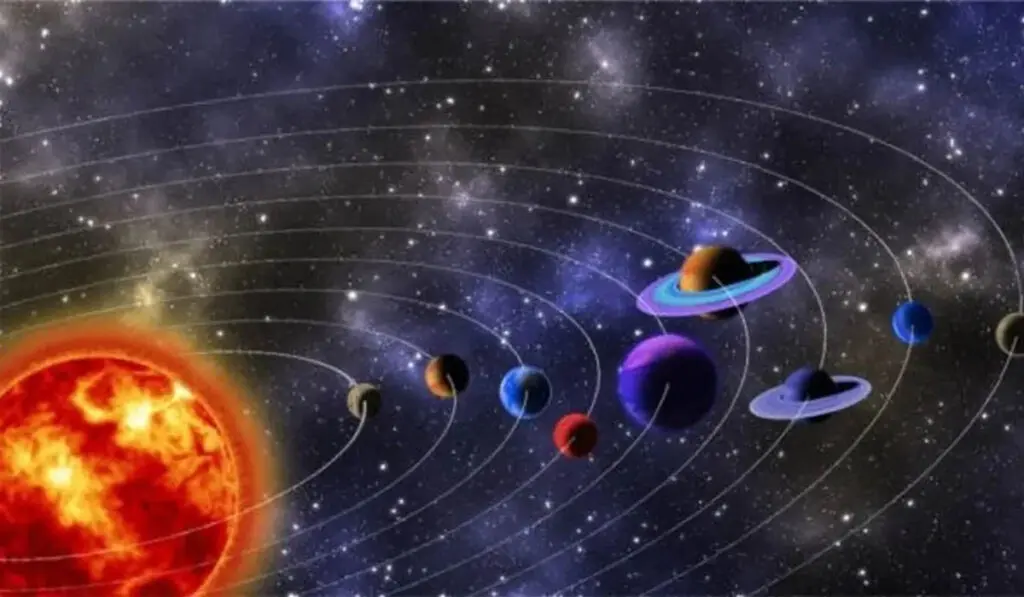
Planets are like characters or “doers.”
They carry qualities, temperament, and behavior patterns.
When placed in a house, they begin to act within that context.
Just like a person behaves differently depending on where they are placed:
- At home
- In office
- In school
- At a party
- At a hospital
A planet behaves differently depending on the house (context) it occupies.
Each planet has a distinct personality:
SUN – Authority, identity, illumination
Sun always tries to shine, to define identity and purpose.
Put it in 10th house → career leadership
Put it in 4th house → shines at home, mother respected
Put it in 7th house → partner influential but ego clashes possible
MOON – Feelings, habits, comfort
Moon adapts, absorbs, nurtures.
In 5th house → creative emotional expression
In 8th house → deep emotional sensitivity
In 11th house → emotional fulfillment through social groups
MARS – Action, courage, motion
Mars drives, pushes, takes initiative.
In 3rd house → bold communication
In 7th house → passionate but argumentative relationships
In 11th house → strong drive to achieve goals
MERCURY – Thinking, communication, business
In 2nd house → skillful speech
In 6th house → analytical mind
In 10th house → professional communicator, strategist
VENUS – Beauty, pleasure, comfort
In 1st house → attractive personality
In 4th house → beautiful home, love for decoration
In 5th house → creativity and romance flourish
⛓ SATURN – Discipline, delay, duty
In 3rd house → disciplined speech
In 6th house → ability to handle responsibility
In 7th house → serious relationships
☊ RAHU / ☋ KETU – Unconventional, karmic energies
Rahu amplifies worldly desires
Ketu detaches, spiritualizes
Each planet expresses its nature, regardless of house.
But how it expresses depends on:
- the context (house)
- the atmosphere (sign)
3. Rashi – The Environment, Quality, or Psychological Climate
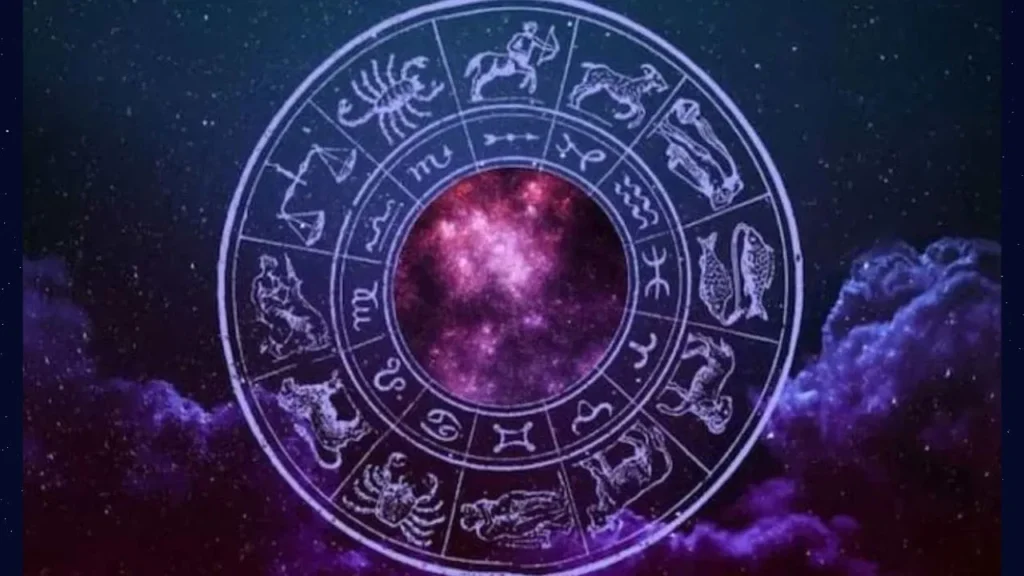
This blog explains that Rashis are “atmospheric qualities.”
Think of Rashis as climate or weather:
- Aries = hot, fiery, impulsive
- Taurus = stable, earthy
- Gemini = airy, flexible
- Cancer = watery, emotional
- Leo = blazing, confident
- Virgo = analytical
- Libra = balanced
- Scorpio = intense
- Sagittarius = adventurous
- Capricorn = cold, disciplined
- Aquarius = free, air-driven
- Pisces = fluid, expansive
Imagine planets as people, houses as locations, and rashis as weather conditions.
Same person behaves differently in different climates:
- In hot weather → energetic, fast, impatient
- In cold weather → slower, reserved
- In a storm → anxious or reactive
- In pleasant weather → comfortable and expressive
Similarly:
⭐ Venus in Aries (Hot Air)
Becomes bold in love, takes fast decisions, gets attracted quickly.
⭐ Venus in Virgo (Analytical Earth)
Becomes practical in relationships, attentive to detail.
⭐ Mars in Cancer (Soft Water)
Action becomes emotional, indirect, fluctuating.
⭐ Mercury in Pisces (Diffuse Water)
Thinking becomes imaginative, nonlinear.
Thus Rashis condition the mood, flavor, and quality of the planet’s action.
Putting It Together: The Full Formula
Now we combine all three:
**Jyotish Interpretation =
Bhava (Where) + Planet (What/Who) + Rashi (How)**
do What u can, Where u r, & How u have by VastuGuruji
Let’s explore real examples in detail.
EXAMPLE 1: Mars in 4th House in Cancer

Bhava (Context):
4th house = home, mother, emotional security, personal comfort
Planet (Doer):
Mars = action, passion, anger, drive, aggression, protection
Rashi (Atmosphere):
Cancer = water sign, emotional, fluctuating, nurturing, sensitive
Interpretation:
Mars wants to act decisively.
4th house is emotional foundation.
Cancer makes Mars emotional, sensitive.
So the combined meaning:
- Native becomes protective of their home.
- Strong emotional reactions at home.
- Repairs, renovations, or movement of furniture frequently.
- Arguments or tensions with mother possible.
- But great motivation to secure emotional safety.
The context (home) + actor (Mars) + climate (Cancer) = result.
EXAMPLE 2: Venus in the 1st House in Taurus

Bhava:
1st house = personality, body, self-expression
Planet:
Venus = beauty, comfort, style, love, harmony
Rashi:
Taurus = stable, earthy, sensual, artistic
Result:
A beautiful, peaceful presence.
Love for art, music, luxury.
Stable relationships.
Attracts admiration.
Body tends to be aesthetically pleasing.
The person behaves like “Venus expressed through Taurus in the field of the Self.”
EXAMPLE 3: Mercury in 3rd House in Gemini

Bhava:
3rd house = communication, skills, siblings, expression
Planet:
Mercury = intellect, speech, logic, analysis
Rashi:
Gemini = air, talkative, curious, adaptable, playful
Combined Meaning:
Master communicator.
Skilled writer or speaker.
Fast learner.
Curious, witty, humorous, expressive.
This is Mercury at home: excellent expression.
EXAMPLE 4: Saturn in the 7th House in Libra

Bhava:
7th = marriage, partnerships
Planet:
Saturn = duty, discipline, delay, structure
Rashi:
Libra = relationship balance, fairness, harmony
Interpretation:
Marriage comes late but is stable.
Partner is mature or older.
Strong sense of responsibility.
Partnerships based on fairness and long-term commitment.
Why This Formula Works Better Than Traditional Cookbook Astrology
Traditional astrology often says:
- “Planet X in house Y gives Z result.”
- “Sign X in house Y means Z.”
But the PDF’s philosophy is more dynamic, realistic, and precise, because:
- Planet alone doesn’t give full meaning.
- House alone doesn’t give full meaning.
- Rashi alone doesn’t give full meaning.
Only the interaction reveals the truth.
This is exactly how real life works.
⭐ Analogy:
If a person with musical talent (planet Venus) enters a library (bhava 4th house), they may find comfort in quiet artistic activities.
But if the same person enters a nightclub (bhava 5th), their artistic nature expresses through dance, fun, and relationships.
Same person → different environment → different expression.
Why Houses Never Change (Key Point)
The Bhavas are unchanging truths, because they represent:
- fixed life domains
- non-negotiable categories of human experience
- universal aspects of existence
Everyone in the world has:
- a sense of self (1st house)
- a relationship with money (2nd house)
- communication/working style (3rd house)
- home environment (4th house)
- creativity or children (5th house)
- work and duties (6th house)
- partners (7th house)
- crises (8th house)
- beliefs (9th house)
- career (10th house)
- social circles (11th house)
- loss or liberation (12th house)
These categories never change, therefore houses are eternal.
But what changes is the behavior inside each house, depending on planets and signs.
When You Read a Chart Using This Method, Something Magical Happens
Instead of memorizing rules, you:
- Understand the soul of the chart
- Begin connecting astrology with real life
- Map planets to real behaviors
- Understand yourself and others more deeply
- Become intuitive rather than mechanical
- See astrology as a living system, not a dead formula
Your reading becomes:
- accurate
- personal
- meaningful
- flexible
- practical
This is the true purpose of Jyotish as explained in this blog.
The Difference Between “What” and “How”
A key insight:
- Planet = What happens
- House = Where it happens
- Rashi = How it happens
Let’s illustrate:
Example: Sun in 10th House
“What” → Sun brings leadership, recognition
“Where” → 10th house = career
“How” → depends on sign:
- In Leo → confident leadership
- In Cancer → emotional leadership
- In Capricorn → disciplined leadership
- In Libra → balanced but sometimes indecisive leadership
Same what and where, but different how.
This is why signs matter: they add nuance, depth, emotional tone, and psychological flavor.
Conclusion: The Formula Becomes a Lens to Read Life
By understanding:
- Bhava = context
- Planet = doer
- Rashi = environment
you begin to see charts like:
- a story
- a movie
- a living ecosystem
- a psychological map
- a karmic blueprint
Not a dry list of rules.