Short answer
According to Guruji, a bedroom can be made in the North, NNE or South, and the room of a newly married couple in the NNW. The kitchen can go in the SE or SSE, a meditation room in the NE, and an entertainment or drawing room in the ENE, East or West. He clearly says this is only a base; the final plan depends on the nature (rajas, sattva or tamas) of the person who lives in the house.
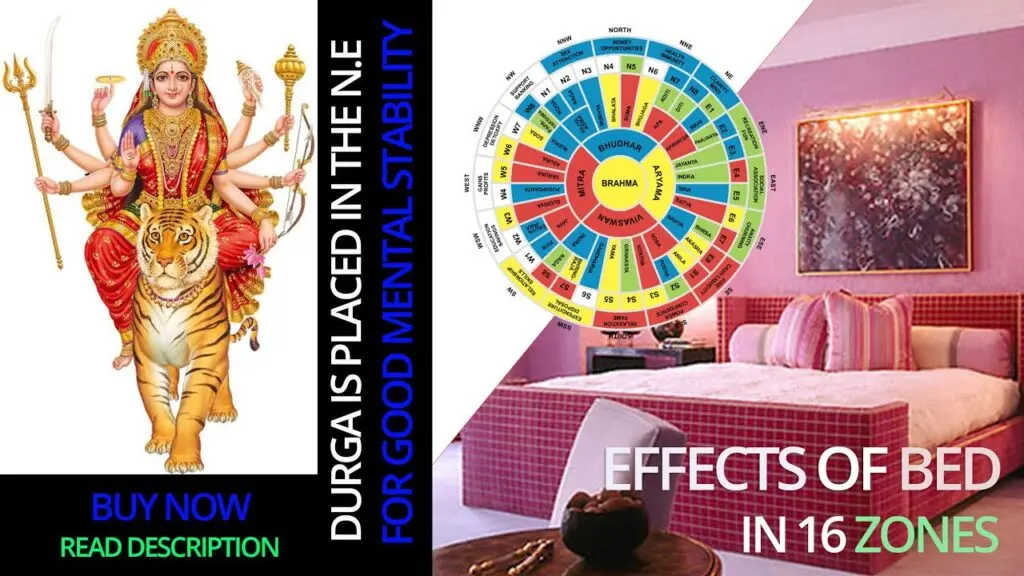
▶ Watch the full video · 19 min · Vastu Guruji (in Hindi)
Every direction is a feeling
In the last few videos Guruji explained the 16 directions. Each direction is a bhav, a feeling that it creates inside the human mind. He says these directions are connected in some way with the human brain and its thinking, and that is how we are able to live this human life well. Today’s topic is rooms, activities and kinds of people in those same zones.
Every person holds one of the three gunas more than the others:
- Rajas: the person who stays super active.
- Sattva: the studious person who loves to read.
- Tamas: the person who feels a little lethargic.
Five elements, five powers and the colours of directions
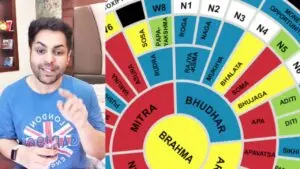
Guruji reads short points from a book and adds his own. A building is made of five elements together and stands because of five powers. There are 16 feelings, and each feeling comes from one direction; for example, earning money and new opportunities is the feeling of the North. Each direction also has a colour. When a building uses these colours in these directions, it stays balanced. Keep the free Vastu Chakra PDF open to see all the zones together.
- North — blue
- East — green
- South-East — fire (red)
- South-West — yellow
- West — white
Rooms from North to South-East
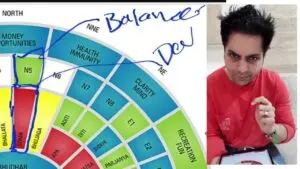
North (N) is the direction of money and new opportunities, and its element is water. A bedroom, a place to sleep, can be made here. NNE is the direction of health; its element is also water, and a place to sleep can be made here too. If you want a meditation room, it can be made in the next zone, the NE.
ENE is the direction of entertainment and welcome. Your entertainment room and drawing room belong here. A small home theatre with a projector and seating also fits here. A dining room can also be made here. In the East (E) a drawing room can be made as well.
SE is the direction of fire and money. The kitchen can be here, and so can your safe and the important documents from which you should always gain. SSE is a powerful direction: a gym or a kitchen can be made here. Health equipment at home, such as a BP machine or the bands people wear on the wrist, can be kept and charged here.
Rooms from South to North-North-West
South (S) is the direction of fame (yash). A bedroom can be made here too. Since it is the direction of name and fame, your office can also be here. SSW can be used for a toilet, and for keeping waste items that never come into use. SW is the direction of relationships, and its element is earth. Many things can be done here, such as an office or a room for study.
West (W) is the direction of receiving and gains. A drawing room where people come to meet you can be made here. WNW is the zone of depression: a washroom can be made here, washing-machine work can be done here, and activities that take sadness out. NW is the zone of banking and support. NNW is the zone of attraction: the room of a newly married couple can be placed here.
The room list is only a base: Sankhya decides
Then Guruji gives a warning: the whole of creation runs on Sankhya. We cannot take this list as a template and design for anyone on that basis. This is where the role of a successful Vastu artist comes in.
In Sankhya, Purusha is the constant factor of life, the part that cannot be changed; here it means any human being, woman or man. Prakriti is rajas, sattva and tamas, the three gunas. Through them we cannot change a person, but we can influence them. Every person is born with his own formula, his own template, and a person of each nature lives well only in certain areas.
So lines like “make this in the North, make that in the South” are only a small base, a short cut taken from Sankhya to give quick pointers.
How an activity in a zone changes the mind
When Purusha and Prakriti meet, a thought is born, and Ahankar (not ego, but the thought taking shape) turns it into a wish such as “I want to buy this.” Guruji says this whole process happens on the 16 zones: the activity we do on each zone is that shape, and through it the mind starts getting influenced.
His example: North is the zone of money and opportunity. If someone builds a washroom there, makes a store room there, or starts any activity that drains money and opportunity, waves start in that person’s mind: “I don’t want to do this work any more”, “there is no fun in this work now”, “there is no benefit in doing this work”.
But this does not act the same way on everyone. A fiery, aggressive rajas person feels his energy drop as soon as he goes near sattva, just as fire goes out when it comes near water, so the North will not activate much for him. For a calm tamas person, such as a trader, a washroom in the money and opportunity zone plays a very big role. So first understand which Purusha this Prakriti is acting on.
Pooja place: which deity in which zone
Guruji also gives a small insight that ordinary families can use: you can make a pooja place by seating different deities in different zones.
| Zone | Deity (as Guruji explains) |
|---|---|
| North (N) | Lakshmi ji, Ganesh ji |
| NNE | Dhanvantari |
| NE | Shiv ji, the Shiv family; this is the place of the isht dev |
| ENE | Radha Krishna |
| East (E) | Ram Darbar |
| South (S) | Kali Maa; Yama also sits in the South |
About Dhanvantari he says that he should be kept in the home, because he is the physician of physicians, through whom you understand the chemical compositions of the world.
Isht dev in the North-East: by the person’s nature
The NE is called the place of the isht dev, one’s chosen deity. But which isht dev for which person? It depends on that person’s nature.
- Water or tamas nature: Shiv ji works very well for this person.
- Sattva nature: Nataraj works very well for this person.
- Rajas nature: ask the person which image he sees first when he is in trouble. Most such people name an elder of the family, father, mother or grandfather, because they make idols of those who have achieved something. A photograph of that elder can be placed in the NE. Power speaks to them, so Durga ji and Hanuman ji can also be placed.
Guruji says nothing is fixed so that every house must run like this. Whose house gets Yama, Kali Maa or Lakshmi ji is decided by Sankhya together with the five elements; the five elements or the 16 zones alone are not enough. To read more about the directions, see directions in Vastu Shastra.
Frequently asked questions
Which direction is best for a bedroom as per Vastu?
According to Guruji, a place to sleep can be made in the North, NNE or South. The room of a newly married couple can be placed in the NNW, the zone of attraction.
Which direction is best for a kitchen as per Vastu?
The kitchen can be in the SE, the direction of fire and money, or in the SSE, the powerful direction. The SE can also hold the safe and important documents.
Which god should be kept in which direction in the pooja room?
Guruji explains: Lakshmi ji and Ganesh ji in the North, Dhanvantari in the NNE, the Shiv family or one's isht dev in the NE, Radha Krishna in the ENE, Ram Darbar in the East and Kali Maa in the South. What sits in whose house is decided by the person's nature.
Which direction is good for a drawing room and a meditation room as per Vastu?
A meditation room can be made in the NE. An entertainment room, drawing room and dining room can go in the ENE, and a drawing room for visitors in the East or West.
What happens if there is a washroom or store room in the North?
North is the zone of money and opportunity. Guruji says a washroom or store room there can drain money and chances, and the mind starts feeling there is no fun or benefit in the work any more. It affects a calm, tamas-natured trader the most.
Are room directions the same for every house in Vastu?
No. Guruji says this list of rooms is only a base. Every person is born with a nature of his own, rajas, sattva or tamas, so a successful Vastu artist designs each house separately according to Sankhya.
Products used in this lesson
 Brass Dhanvantari Idol — Big, 7.5 inch, Lotus Base Original price was: ₹2,999.₹2,500Current price is: ₹2,500.View →
 Nataraja Shiva Idol (Premium Vastu Murti)₹3,950View →
 Radha Krishna Idol₹1,640View →
 Veer Hanuman Idol 9 inch — 3.25 kg₹4,499View →
 Sweet Ganesha Idol₹1,357View →
All payments online — UPI / PhonePe / GPay / card.
📖 Read more: वास्तु में दिशाओं का महत्व — पूरी गाइड — detailed guide by Vastu Guruji Rana Sikander (vastuguruji.in).